Fuel Cell Electric Vehicles (FCEVs): Zero-Emission Mobility with Extended Range
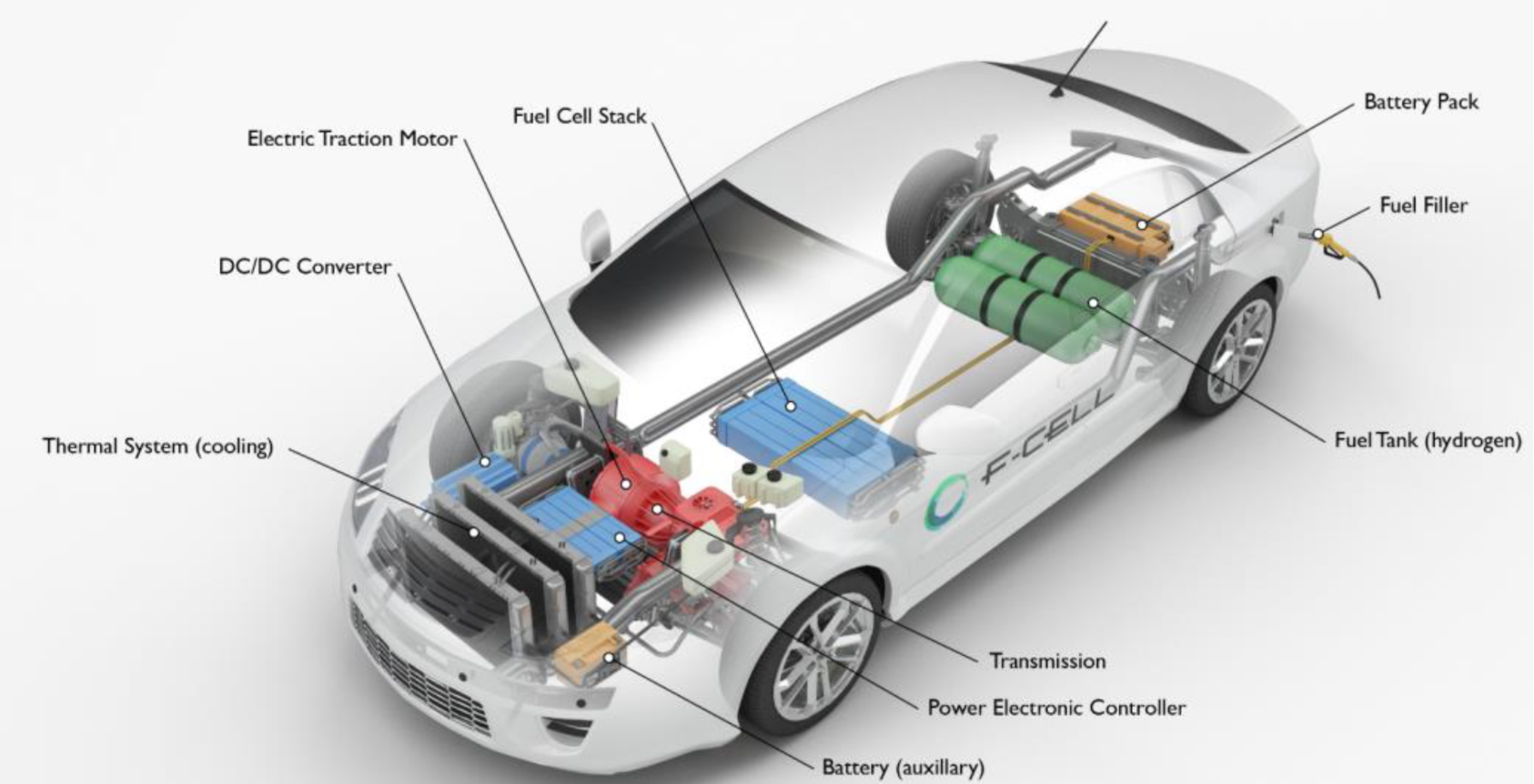
Fuel Cell Electric Vehicles (FCEVs)—often loosely referred to as fuel-cell vehicles. FCEVs represent a promising zero-emission alternative that combines the environmental benefits of Battery Electric Vehicles (BEVs) with a driving range comparable to conventional internal combustion engine vehicles (ICEVs).
What Is a Fuel Cell Electric Vehicle (FCEV)?
A Fuel Cell Electric Vehicle (FCEV):
- Uses a fuel cell to generate electricity onboard
- Supplies power to an electric motor for traction
- Produces zero tailpipe emissions (only water vapor)
When overall emissions are considered—including hydrogen production—FCEVs still offer very low net emissions, especially when hydrogen is produced using clean energy sources.
Key Advantages of FCEVs
FCEVs offer several important benefits:
- Zero roadside emissions, similar to BEVs
- Driving range comparable to ICE vehicles
- Fast refuelling, closer to gasoline refuelling times
- Quiet and smooth electric propulsion
These features make FCEVs attractive for long-distance and heavy-duty applications where battery-only solutions may face limitations.
Major Challenges Facing FCEVs
Despite their advantages, widespread adoption of FCEVs is limited by two major challenges:
- High Initial Cost
- Fuel cells are expensive, leading to high vehicle cost per kilowatt
- Manufacturing scale is still limited compared to batteries
- Lack of Hydrogen Refuelling Infrastructure
- Hydrogen refuelling stations are scarce
- Establishing infrastructure requires huge investment
- Policy and regulatory support are essential
Hydrogen Storage Methods in FCEVs
Three practical hydrogen storage approaches are currently considered for FCEVs:
Compressed Hydrogen Gas (CHG)
- Stored at 350–700 bar
- Infrastructure similar to CNG vehicles (200–248 bar)
- High specific energy (good energy density by weight)
- Safety concern: High-pressure explosion hazard
Liquid Hydrogen (LH)
- Stored at approximately –253 °C under pressure
- Requires cryogenic storage technology
- Infrastructure is complex and energy-intensive
- Even more demanding than liquid oxygen storage
Metal Hydride (MH)
- Hydrogen stored within metal alloys
- High safety due to low-pressure storage
- Infrastructure similar to battery swapping
- Requires:
- 120–200 °C to release hydrogen
- >700 bar pressure to recharge
- Low specific energy, reducing vehicle range
Comparison of Storage Methods
- CHG and LH:
✔ High specific energy
✖ Safety concerns and infrastructure challenges - MH:
✔ Safer storage
✖ Lower energy density and reduced driving range
Each method involves trade-offs between energy density, safety, infrastructure complexity, and cost.
Future Outlook of FCEVs
The commercialization of FCEVs depends on two critical breakthroughs:
- Reduction in fuel cell cost per kilowatt
- Strong energy policies and mandates to develop hydrogen refuelling infrastructure
If these challenges are addressed, FCEVs could play a significant role in achieving large-scale zero-emission transportation.
Concluding Remarks
Fuel Cell Electric Vehicles combine the best aspects of electric propulsion and long driving range. While technological and infrastructural barriers remain, continued research and policy support could position FCEVs as a key component of the future clean mobility ecosystem—especially for applications where battery-only vehicles face practical limits.



latest video


news via inbox
Nulla turp dis cursus. Integer liberos euismod pretium faucibua